
Skip To Content
Home / Conference 2026 / Speaker Biographies

Speaker Biographies

External Website Headers (3)

Learn more about our speakers!

  • Mohamed Badsha
    Chief Executive Officer, Reconnect Health Services


    Mohamed Badsha is Chief Executive Officer of Reconnect Health Services, a community-based organization delivering integrated mental health, addictions, services for seniors, caregiver support and community support services across Toronto.


    With more than two decades of progressive healthcare leadership experience, Mohamed has led complex system transformation initiatives focused on integration, service excellence, financial sustainability, and governance modernization. Under his leadership, Reconnect has advanced seniors care expansion, mental health and addiction supports, strengthened cross-sector partnerships, and embedded quality and performance frameworks aligned with system priorities.


    Central to Mohamed’s leadership is an unwavering commitment to client care and service excellence. He has fostered a culture of continuous quality improvement, ensuring services are accessible, accountable, and designed around client experience and measurable outcomes. He believes strong financial stewardship and operational discipline must ultimately translate into better care, dignity, and impact for individuals and families.


    Recognized for his strategic clarity and data-informed decision-making, Mohamed has overseen multi-million-dollar budgets, complex stakeholder environments, and board-level governance strategy. His leadership consistently aligns strategy, culture, and operations to drive sustainable, high-performance organizations.
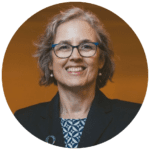

  • Dr. Mary Bartram
    Adjunct Research Professor, Carleton University ; McConnell Visiting Scholar, Max Bell School of Public Policy, McGill University


    Dr. Mary Bartram has extensive experience in mental health and substance use health policy includes research, teaching, and program implementation in collaboration with federal and territorial governments, Indigenous organizations, and NGOs. She is currently the J.W. McConnell Visting Scholar at McGill University’s Max Bell School of Public Policy, and an Adjunct Research Professor at Carleton University’s School of Public Policy and Administration where she teaches mental health and substance use health policy. She holds a PhD in Public Policy from Carleton University and has conducted postdoctoral research at both McGill University and the University of Ottawa.


    Her research has focused on the mental health and substance use health workforce, harm reduction, equity in access to psychotherapy, and system financing. In addition to her academic roles, Dr. Bartram led strategic initiatives in the community services sector as the CEO of Rideauwood Addiction and Family Services, and championed integrated approaches to mental health and substance use, managed investments in 40 research projects on cannabis and mental health, and was a key leader in the development of the Mental Health Strategy for Canada in previous Director roles with the Mental Health Commission of Canada. A Registered Social Worker, Dr. Bartram also holds an MSc in Family Therapy from Purdue University.

  • Dr. Alexander Caudarella
    CEO, Canadian Centre on Substance Use and Addiction


    Dr. Alexander Caudarella is a bilingual family physician with specialty training in substance use health issues. Previously, Alexander served as the medical director of substance use services (SUS) at St. Michael’s Hospital in Toronto, and lead SUS physician with Inner City Health Associates.


    He has served as a substance use consultant and clinician for the Government of Nunavut. For more than a decade, Alexander worked on Indigenous-lead programs in Canada and abroad aimed at building capacity, decreasing stigma and building local workforces.

  • Carole-Anne Chiasson
    Executive Director, Youth Wellness Hubs Ontario


    Carole-Anne has over 20 years of experience as a clinician and healthcare leader working with teams who deliver services for children, youth and families.


    At CAMH, Carole-Anne has led large-scale initiatives such as Thriving Minds (a CAMH–SickKids partnership), YouthVAST (an $8M provincial addictions support model), and University of Toronto Navigation program. Her work emphasizes equity, co-design with youth and families, and the integration of Learning Health System principles into practice.

  • Deborah Cohen
    Chief Operating Officer Health Workforce Canada


    Deborah Cohen has more than 20 years’ experience in health care and health workforce data systems through the Canadian Institute of Health Information (CIHI). She is an Adjunct Professor with the School of Epidemiology and Public Health, Faculty of Medicine, at the University of Ottawa. She holds a PhD in Population Health with a research focus on modelling, equity and health system performance.

  • Michael Cooper
    Vice President, Data and Partnerships, Mental Health Research Canada


    Michael Cooper is an experienced charity executive with over 16 years of experience in fund development, project management and government relations. He began his career working with senior political leaders in Ottawa before transitioning into the charitable world, which led to successful roles at Futurepreneur, Operation Springboard, The Learning Partnership, Omega Foundation and Diabetes Canada. He spent several years working in management consulting; at one firm he led numerous projects involving First Nations communities across Canada.


    Michael advocates for improving our understanding in detecting, treating and managing mental health issues. He has a strong focus on the utilization of data to inform policy and advance mental health care in Canada and currently oversees MHRC’s large scale data project tracking the ongoing mental health of Canadians.


    He is married with two young boys and has a passion for travelling, scuba diving, basketball and technology.

  • Sarah Hobbs
    Chief Executive Officer, Alliance for Healthier Communities


    Sarah Hobbs, joined the Alliance for Healthier Communities as the CEO in the fall of 2020. She has worked in community health for over twenty years, holding several roles, including Director of Health Services and Executive Director of Planned Parenthood Toronto, a Community Health Centre for youth. Sarah is the current chair of the Primary Care Collaborative and was the secretariat for the Ontario Community Health Compensation Committee. Sarah is committed to working from an anti-oppressive and anti-racist framework and over the course of her career has demonstrated an unwavering commitment to health equity and the models of health and wellbeing.


    Sarah has a Bachelor of Arts from McMaster University, a Master’s Certificate in Healthcare Management from the Schulich School of Business and a Certificate in Advanced Health Systems Leadership from the University of Toronto’s Rotman School of Management.

  • Mark MacAulay
    President and Chief Executive Officer, Ottawa Salus


    Mark MacAulay is a collaborative systems leader in Canada’s mental health and supportive housing sector. Known for building cross-sector partnerships that translate vision into implementation, he advances scalable housing and care models for people facing complex mental health and substance use challenges.


    As Chief Executive Officer of Ottawa Salus, Mark is leading several innovative initiatives, including a $25M Aging in Place supportive residence for 54 individuals with persistent mental illness and substance use disorders, opening in 2026. He is also spearheading the development of supportive housing programming for Matthew Perry House Ottawa and guiding service integration within two newly established HART Hubs in partnership with Somerset West Community Health Centre and Pinecrest-Queensway Community Health Centre.


    Ottawa Salus supports more than 1,000 residents and clients annually across 15 Salus-owned properties, Veterans’ House Ottawa, and Ottawa Community Housing. The organization delivers a continuum of supportive housing services — including forensic housing, transitional rehabilitation, and long-term community-based supports — designed to stabilize health, reduce system pressures, and strengthen pathways between housing, primary care, and hospital services.


    Mark serves on the Boards of the Alliance to End Homelessness Ottawa and Addiction and Mental Health Ontario.

  • Dr. Scott Neufeld
    Assistant Professor, Brock University


    Dr. Scott Neufeld (he/him) is an Assistant Professor of Community Psychology at Brock University. He has a PhD in Social Psychology from Simon Fraser University and has lived in the Niagara Region of Ontario with his family since 2021. His research, knowledge mobilization and organizing work focus on two key areas: 1) developing an understanding of substance use-related stigma (and how it can be addressed) that acknowledges the structural, political, historical and intersectional dimensions of stigma and 2) working towards the equitable empowerment and inclusion of people who use(d) drugs in research, policy-making and service provision that impacts them. He regularly shares his work with public health and harm reduction organizations, with a recent focus on seeing structural stigma and organizing strategies for resisting stigma collectively. He has been privileged to learn from and collaborate with people who use(d) drugs on research and organizing in Vancouver, BC’s Downtown Eastside (e.g. VANDU, WAHRS) and more recently in St. Catharines, Ontario with the Niagara Advocates with Lived and Living Experience (NALE).

  • Aaron Stauch
    Executive Director, OMSSA


    Aaron is the Executive Director of the Ontario Municipal Social Services Association. Aaron works with Ontario’s 47 Service Managers to support and amplify policy solutions to challenges in housing, homelessness, children’s services, and social assistance. His focus is on helping the sector make sense of a rapidly changing environment, connecting across regions, and bringing forward a clear, shared perspective to government. Before OMSSA, Aaron led projects and teams across the Ontario Government, municipal government, and community organizations — from building an Employment Services System Manager, to leading the project management office for social assistance transformation, to creating one of the province’s first county-level government relations offices.

  • Dr. Amy Porath
    Director of Research and Knowledge Mobilization, Knowledge Institute on Children and Youth Mental Health and Addictions


    Dr. Amy Porath, PhD, CHE is the Director of Research and Knowledge Mobilization at the Knowledge Institute on Child and Youth Mental Health and Addictions. Committed to driving high-quality care, Amy is a trusted advisor dedicated to system transformation in the mental health and substance use health sector and contributes her expertise to inform policy, practice, programs and quality standards. She is an Adjunct Professor at the University of Ottawa in the School of Psychology and has an appointment with the Children’s Hospital of Eastern Ontario Research Institute. Amy’s strategic leadership in providing Canadians with evidence to make informed decisions about cannabis during legalization led her to being named one of Canada’s Top 100 Health Influencers in both 2019 and 2020.

  • Joanne Simons
    CEO, Casey House


    Joanne Simons is the CEO of Casey House, Canada’s first and only stand-alone hospital for people living with and at risk of HIV. For nearly a decade, she’s led an organization known for its holistic approach to health and well-being with a relentless commitment to transforming health care through compassion, social justice, and a deep sense of belonging for clients, staff, and community alike.


    Under her leadership, Casey House has evolved and expanded its mandate to include prevention for those at risk of HIV. She has also cultivated a values-led culture grounded in dignity, equity, and co-designed, relationship-based care.


    A bold and compassionate advocate, Joanne is leading transformative change—building a more inclusive workforce and advancing care models that integrate harm reduction, mental health, and housing supports. She continues to challenge systemic inequities with a focus on equity and impact.


    A lifelong curious learner, Joanne did not pursue formal education beyond high school, instead she built her leadership through listening, learning, and growing alongside the communities she serves. She believes wisdom lives in relationships—not just classrooms.


    Prior to Casey House, Joanne held executive roles in national health charities and served on boards including CATIE, Street Haven, The Redwood Shelter, Health Partners, Hazel Burns Hospice, and Better Care Faster. A proud member of the LGBTQ2S+ community, she and her wife live in Toronto’s Junction neighborhood.

  • Dr. Nadiya Sunderji
    President & CEO Waypoint Centre for Mental Health Care


    Dr. Nadiya Sunderji was appointed President & CEO of Waypoint Centre for Mental Health Care in Penetanguishene on June 13, 2022 following 3 years as Vice President Medical Affairs and Chief of Staff. Throughout her time at Waypoint she has led the introduction of new programs, standards, and roles to improve patient and family experience and outcomes across Waypoint and in the broader health and mental health system. A physician with 20 years of progressive leadership experience, Nadiya is a strategic transformational leader with a passion for research, quality improvement and integrated collaborative mental health care. Dr. Sunderji received her Doctor of Medicine in 2003, her specialty certification in Psychiatry in 2008, and her Masters in Public Health in 2016 with a certificate in Quality, Patient Safety, and Outcomes Research. She has also completed San’yas Indigenous Cultural Safety training, Mission Leadership through the Catholic Health Sponsors of Ontario, a Certificate in Mental Health Law from Osgoode Hall.


    Law School, York University and the Institute of Corporate Directors Directors Education Program. Dr. Sunderji has dedicated her career to advancing accessible equitable high quality mental health service delivery in strong partnership with mental health service users, caregivers, clinicians, researchers and policymakers. In several prior clinical and academic leadership roles, she led quality improvement and integrated mental health care at Unity Health and at the University of Toronto. She is past editor of the peer-reviewed journal Families, Systems & Health and past coordinator of the annual Canadian Collaborative Mental Health Care Conference. She previously served as a Board member of Wendat Community Programs. She co-chairs the Ontario Hospital Association Mental Health & Addictions Hospital Committee, where she is a champion for collaboration across and beyond the health sector. She is a member of the Ontario Health Central Region’s Hospital Operations Table and Health Systems Recovery and Transformation Table, Committee and the Ontario Health Mental Health & Addictions Centre of Excellence Oversight Table. Nadiya also chairs the Canadian Psychiatric Association’s Public Policy Committee and is a member of the Ministry of Health Physician Services Committee.

Not A Member?
Let's work together to improve the well-being of Ontarians
Become a Member
Already a Member?
Check out all the latest news, research, education opportunities and other exclusive membership benefits and resources.
Go To Member Resources